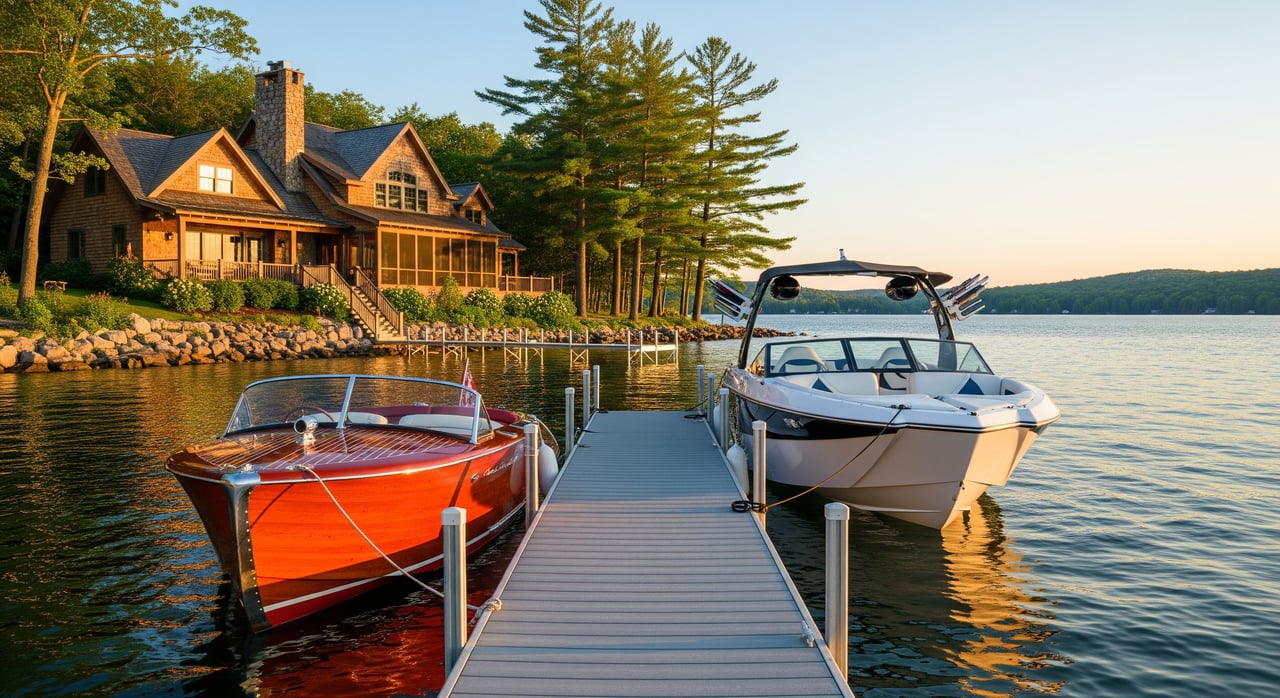
If you’ve heard Walloon Lake described as an “all-sports lake,” you might wonder what that really means for how you can use the water. If you’re buying or selling a waterfront or near-lake home, the answer matters for lifestyle, value, and peace of mind. In this guide, you’ll learn the plain-English meaning of “all-sports,” how rules actually work on Walloon, and the specific checks to complete before you transact. Let’s dive in.
“All-sports lake” explained
“All-sports lake” is a common real estate and recreation term. It typically signals that activities like powerboating, personal watercraft (PWC), water-skiing, tubing, wakeboarding, fishing, paddling, and sailing occur on the lake. In other words, a full range of motorized and non-motorized use is common in practice.
Here is the key point: “All-sports” is descriptive, not a legal status. Michigan does not define it by statute. What is allowed on any given day depends on state law, local ordinances, and private restrictions tied to a property or association.
For you as a buyer or seller on Walloon Lake, “all-sports” is a helpful lifestyle indicator. Still, you should confirm the specifics that apply to your parcel and your intended use before you rely on the label.
Who sets the rules
Michigan state law and DNR
Michigan’s Department of Natural Resources (DNR) sets and enforces boating rules under state law. That includes boat registration and titling, boater education requirements, safety gear, navigation rules, and operation standards. The DNR also leads aquatic invasive species education and best practices for boaters.
What to do: Review current Michigan boating rules for operator education, registration, and required equipment, and follow the DNR’s clean, drain, and dry guidance to protect lake health.
County and township enforcement
Local marine patrols and sheriff’s offices enforce speed, wake, and safety rules on inland lakes. Townships can establish no-wake areas or other restrictions through ordinance. On Walloon Lake in Charlevoix County, you should verify any current no-wake zones, PWC rules, and enforcement practices through the Charlevoix County Sheriff’s Office and the township serving your address in ZIP 49796.
What to do: Ask for current maps or descriptions of no-wake zones, any time-of-day limits, and seasonal rules that may apply near the property you are considering.
Lake associations and private covenants
Walloon Lake has active local organizations that promote courtesy, safety, and lake health. These groups may publish voluntary boater etiquette and share water quality information. Separately, deeds, covenants, and homeowners’ associations can set private rules for docks, boat types, guest trailer parking, or rental use of riparian rights.
What to do: Read your title work and any HOA or association rules. Private restrictions do not replace law, but they do govern how owners and guests can use shared facilities and the shoreline.
Permits and shoreline work
Michigan’s environmental and permitting agencies oversee docks, permanent structures, dredging, and shoreline alterations. Township zoning can also regulate setbacks, boathouses, and mooring density. If a prior owner added or modified a dock, verify that permits were obtained and remain compliant.
What to do: Confirm existing permits for docks and shoreline structures and ask what approvals are needed for any changes you plan.
What to verify at Walloon Lake
Before you close, gather documents and speak with the right offices so there are no surprises.
- Ask the seller or listing agent for copies of dock permits, the recorded deed and plat, and any HOA or lake association rules tied to the property.
- Contact the Charlevoix County Sheriff’s Marine Patrol to confirm current no-wake zones, PWC requirements, and typical enforcement patterns on Walloon Lake.
- Review Michigan DNR resources for boater education and registration requirements and current aquatic invasive species guidance.
- Request recent aquatic invasive species or water quality reports from a Walloon Lake association or the local conservation district.
- Speak with the township zoning or building department about shoreline setbacks, dock rules, and any approvals needed for planned improvements.
- Confirm insurance requirements with your carrier, including coverage for docks, boats, and guest use of watercraft.
Safety and boater requirements
Michigan requires boater safety certification for certain operators and vessel types. Age thresholds and course requirements can change, so verify current standards before letting family or guests operate a boat or PWC. All motorized vessels, including PWCs, generally must be registered.
Carry required safety gear, including life jackets for each person, navigation lights after dark, and other equipment as applicable to your vessel. Follow no-wake and speed rules near shore, marinas, and narrow channels. For PWCs and tow sports, confirm any distance-from-shore or time-of-day limits that may apply locally.
To protect Walloon Lake, follow clean, drain, and dry practices when moving boats or equipment between water bodies. Ask about any inspection or wash programs at local launches.
Docks, moorings, and riparian rights
Determine whether the property is riparian, meaning it has direct frontage and legal rights to place a dock or moor a boat subject to law and permits. Some homes rely on shared or association access via an easement, which can have rules for dock space, hours, and guest parking.
If you plan to replace or extend a dock, confirm what is allowed by the state and township, and whether your HOA or covenants set size or placement limits. If a dock is already in place, verify that it was installed with proper permits and remains compliant.
Practical ownership considerations
- Insurance and liability: Your insurer may require compliance with boater education, registration, and safety rules to cover incidents on the water or at the dock. Check homeowners and umbrella coverage, including guest operation of boats or PWCs.
- Noise and wake: Wake sports and larger boats can accelerate shoreline erosion and prompt neighbor complaints. Ask if there are active disputes or proposed ordinance changes that could affect future use.
- Access and storage: Proximity to marinas, fueling, winter storage, and repair services affects convenience. Confirm where you will launch, store, and service boats, and whether there are capacity limits.
For sellers: framing the lifestyle accurately
You can market the “all-sports” lifestyle while keeping expectations clear. Provide buyers with dock permits, association rules, and any correspondence about shoreline work or local enforcement. Highlight nearby marinas and launch options and share community etiquette or lake association resources.
This documentation builds buyer confidence and reduces friction in underwriting and insurance review. It also supports top-of-market positioning for well-prepared, waterfront listings.
Quick buyer and seller checklist
- Confirm if the parcel is riparian or has shared access, and review easement terms.
- Obtain dock and shoreline permits and verify compliance.
- Review HOA or association rules for boat types, dock use, and guest parking.
- Verify current no-wake zones, hours, and PWC rules with local marine patrol.
- Check boater education and registration requirements with the DNR.
- Ask for recent AIS or water quality reports for Walloon Lake.
- Review homeowners and umbrella insurance for dock and watercraft liability.
Next steps
On Walloon Lake, “all-sports” usually aligns with a full spectrum of boating and tow sports, but the details are controlled by law, enforcement, and private rules. When you verify those layers up front, you protect your lifestyle, your investment, and your closing timeline.
If you’re planning to buy or sell on Walloon Lake, let a local expert guide you through the details that matter. Schedule a free consultation with Pat Leavy - Kidd & Leavy Real Estate to discuss your goals and the documents to review before you make your next move.
FAQs
What does “all-sports lake” legally mean in Michigan?
- It is a descriptive term used in listings and by locals; Michigan does not define it by statute, so actual use depends on state law, local ordinances, and private restrictions.
Are there time-of-day limits for PWCs on Walloon Lake?
- Specific PWC hours can be set by state or local rules; verify current limits with the Charlevoix County Sheriff’s Marine Patrol and Michigan DNR resources before operating.
How can I confirm a Walloon property is riparian?
- Review the recorded deed and plat with your agent or title company to confirm direct frontage and riparian rights, and check for any association or easement-based access.
Do I need a permit to install or change a dock?
- Dock and shoreline projects often require state and local approvals; confirm requirements with Michigan permitting authorities and the township before starting work.
Could aquatic invasive species affect property value?
- Yes. AIS can impact recreational enjoyment and maintenance costs; request recent lake surveys or management plans from local associations or conservation districts.