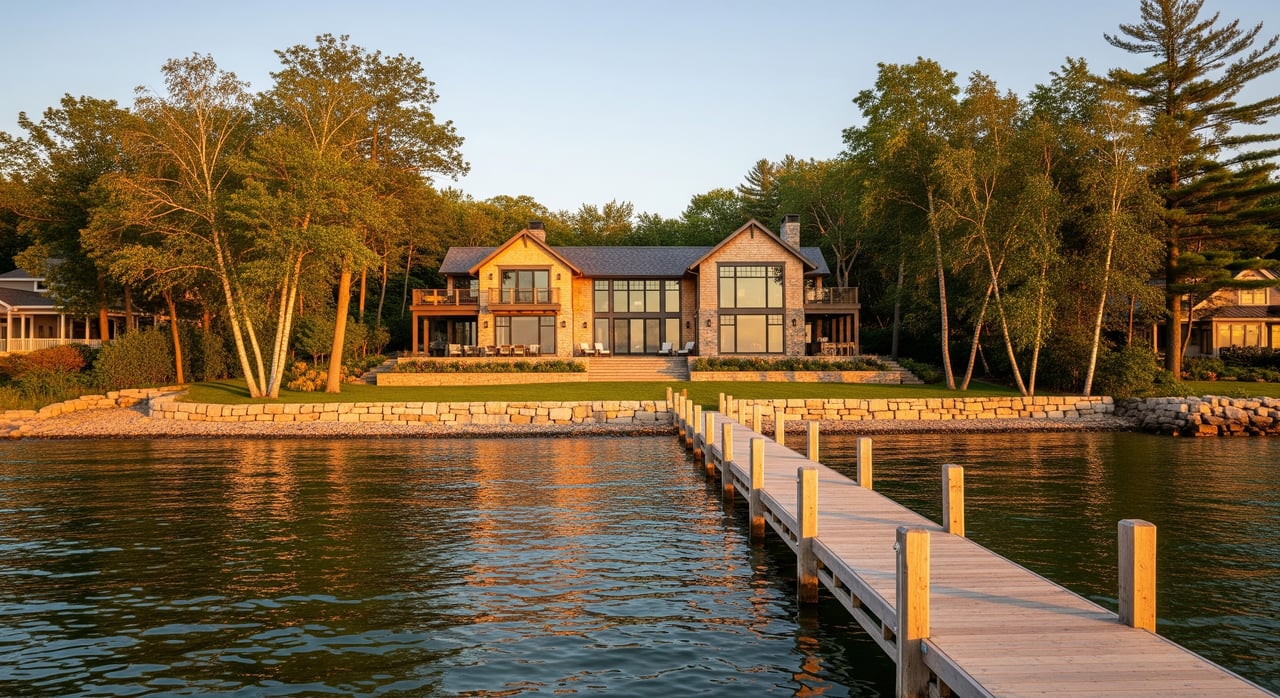
Are you dreaming of a Lake Charlevoix home and a private dock for your boat? Before you move forward, it is important to understand how riparian rights work in Michigan and how local rules shape what you can and cannot do on the water. With the right plan, you can protect your investment and enjoy the lake with confidence.
In this guide, you will learn what riparian rights mean on Lake Charlevoix, how public trust rules limit private use, and the permits and documents to review before you buy. You will also get a buyer’s checklist tailored to Charlevoix so you can avoid surprises and close with confidence. Let’s dive in.
What riparian rights mean in Michigan
Riparian rights are the property rights that come with owning land that touches a lake or river. On Lake Charlevoix, those rights usually include access to the water, reasonable recreational use like boating and swimming, and the ability to place a private dock if allowed by law and local rules.
These rights typically transfer with the deed when you buy a lakefront parcel. They can be limited by recorded easements, covenants, or association rules. Always confirm what your specific deed conveys.
Public trust limits your use
Michigan’s public trust doctrine protects the public’s use of navigable waters for navigation, fishing, and boating. Your private rights cannot block or unreasonably interfere with those public uses. That is why structures and shoreline work often require permits and review.
Reasonable use among neighbors
Riparian owners must use the water in ways that are reasonable and do not harm other owners or the public. For example, a dock that blocks a neighbor’s access or creates a hazard can be restricted by local rules or permitting agencies.
Local rules on Lake Charlevoix
Shoreline rules can vary across the City of Charlevoix and nearby townships. Before you plan a dock or shoreline project, check local zoning for setbacks, dock dimensions, and placement. Start with the city’s planning and zoning resources at the City of Charlevoix.
Many in-water or shoreline activities also require state permits. Review guidance from the Michigan EGLE permit program for inland lakes. Larger in-water work that involves fill or dredging can trigger federal review by the U.S. Army Corps of Engineers.
For boating, safety, and aquatic invasive species prevention, the Michigan DNR offers rules and best practices you should follow on Lake Charlevoix.
Docks and boat slips
Lakefront parcels may have exclusive docks, shared community docks, or no dock rights. Shared facilities are often governed by recorded agreements or HOA rules. Municipal ordinances can also limit the size, location, or number of docks based on frontage and setbacks.
Shoreline stabilization and natural buffers
Riprap, seawalls, and beach creation typically require permits. Agencies often encourage natural shoreline restoration to reduce erosion and protect water quality. Ask sellers for records of past shoreline work and permits, and verify future plans with local officials.
Septic, wells, and water quality
Many lakefront homes use private septic systems and wells. Inspections, replacement, or upgrades may be required during a sale or remodel. The county health department can outline current standards and any required approvals.
Flooding and lake levels
Water levels can fluctuate through the year. Review flood maps and insurance needs during due diligence, and discuss coverage with your insurance agent even if the home is not in a mapped floodplain.
How to verify riparian rights before you buy
Use this Charlevoix-focused checklist to confirm exactly what you are getting.
Title and deed review
- Order a full title search prior to making final commitments.
- Read the deed for language about water’s edge, docking, or access rights.
- Look for any recorded easements, covenants, or association rules that affect shoreline use or docks.
- Verify whether any riparian rights were previously reserved or transferred.
Boundary and survey
- Order a current ALTA or boundary survey that shows the shoreline, docks, and any structures near the water.
- Confirm how the boundary relates to the ordinary high-water mark and your intended dock location.
Municipal and permit checks
- Contact the local planning or zoning office where the property sits to confirm allowable dock size, placement, and setbacks.
- Ask about rules for boathouses, moorings, and shoreline modifications.
- Review state permit needs through Michigan EGLE. If fill or dredging is involved, consult the U.S. Army Corps of Engineers.
- For the City of Charlevoix, start with planning and zoning resources at the City of Charlevoix.
Physical and environmental checks
- Inspect the dock and shoreline, including the structure, anchoring, and condition.
- Ask for records of dock construction and past shoreline work along with permits.
- Schedule septic and well inspections and review maintenance history.
- Learn about aquatic invasive species and follow Clean, Drain, Dry practices recommended by the Michigan DNR.
Community and shared-rights checks
- If there is an HOA or lake association, obtain bylaws and rules for docks, slips, and shared access.
- Confirm how boat slips or beach access are allocated and whether there are maintenance assessments.
Valuation and future use
- Confirm how frontage width affects dock permissions and design.
- Budget for shoreline stabilization, dock maintenance or replacement, and septic system care.
Who to contact
- Municipal planning and zoning offices in Charlevoix and nearby townships.
- State permit staff at Michigan EGLE.
- Federal permitting staff at the U.S. Army Corps of Engineers.
- County departments for deeds, health, and building processes at Charlevoix County offices.
Common scenarios on Lake Charlevoix
Deed to the water’s edge with a shared dock
You may own to the shore, but docking is governed by a recorded shared-dock agreement. In practice, your right is to use a designated slip rather than to place a new private dock.
Association lot with lake access easement
You may have lake access and the ability to launch or swim, but no right to install a private dock. Confirm the exact easement terms and any time-of-use or parking rules.
New or larger dock than neighbors
Local ordinances and state permits may limit the size and placement. Frontage width, setbacks, and navigation safety will guide what is approved.
Smart negotiation tips for buyers
- Make your offer contingent on confirming riparian rights and dock permissions in writing.
- Request all permits, approvals, and maintenance records for docks and shoreline work.
- Include time for a survey and municipal/EGLE review in your due-diligence period.
- Price in future costs like dock replacement, shoreline stabilization, and septic upgrades.
Work with a local expert
Waterfront purchases on Lake Charlevoix are rewarding when you have clarity on riparian rights and a strong plan for permits and maintenance. If you want a seamless experience from showings to closing, connect with a local team that handles high-value waterfront every day. Schedule a conversation with Pat Leavy - Kidd & Leavy Real Estate to review your goals, shortlist the right properties, and navigate due diligence with confidence.
FAQs
Do riparian rights give me exclusive use of the water?
- Not always. Riparian rights are subject to Michigan’s public trust, state law, and any recorded easements or covenants. Exclusive docking or exclusion of the public can be limited by those rules.
Where does my property end at the lake?
- The boundary depends on your deed language and local legal boundaries, often the ordinary high-water mark. A current boundary survey is the reliable way to locate it.
Can I build a dock, boathouse, or seawall on Lake Charlevoix?
- Maybe. Structures often need municipal approval and permits from Michigan EGLE. Larger in-water work may also require U.S. Army Corps of Engineers review.
What if my deed reaches the water but there is a shared dock?
- A recorded easement or HOA agreement may allocate docking rights. Title documents control how slips are assigned and whether new docks are allowed.
Do I need flood insurance for a Lake Charlevoix home?
- It depends on FEMA mapping and your lender. Even outside mapped floodplains, waterfront homes can face water-related risks, so discuss coverage with your insurance agent.
Who should I contact to verify dock and shoreline rules?
- Start with local planning and zoning, then confirm state permit needs with Michigan EGLE. For substantial in-water work, check with the U.S. Army Corps of Engineers. For deed and easement records, contact Charlevoix County offices.