Picture your perfect day on Little Traverse Bay, then imagine the peace of knowing exactly what you can build, where you can dock, and how your shoreline rights work. If you are buying or selling in Petoskey or around Emmet County, the language of waterfront real estate can feel technical. This glossary gives you clear, local context so you can make confident decisions without surprises. You will learn the must-know terms, why each one matters here on the Great Lakes, and what to verify during due diligence. Let’s dive in.
Ownership and shoreline basics
Littoral vs. riparian
- Definition: Littoral applies to land that borders standing water like lakes and the Great Lakes. Riparian applies to land along flowing water such as rivers and streams.
- Why it matters in Petoskey: Most properties on Little Traverse Bay involve littoral rights focused on access and reasonable use of the water. River or creek frontage in Emmet County involves riparian rights that can work differently.
- What to check: Confirm in the deed and survey whether your frontage is on a lake or a river and how rights are described.
Public trust doctrine
- Definition: Michigan holds Great Lakes bottomlands and submerged lands in trust for the public up to the Ordinary High Water Mark, known as the OHWM.
- Why it matters in Petoskey: You typically have access and reasonable use from your shore, but areas below the OHWM are subject to public use for navigation and recreation. You do not own the lakebed beyond the state’s trust limits.
- What to check: Ask your surveyor to identify the OHWM and review any recorded public easements.
Ordinary High Water Mark (OHWM)
- Definition: The OHWM is the legal line that separates private upland from state-managed submerged lands. It is identified by physical signs like vegetation changes and historical water levels.
- Why it matters in Petoskey: The OHWM affects setbacks, whether a beach area is private, and which structures or improvements require state or federal permits.
- What to check: Obtain a recent survey that shows the OHWM and discuss it with local zoning officials before planning any shore work.
Accretion, reliction, erosion, and avulsion
- Definition: Accretion is gradual land gain from sediment. Reliction is land revealed by permanent water withdrawal. Erosion is gradual land loss. Avulsion is sudden change from events like storms.
- Why it matters in Petoskey: Boundary shifts may affect title, setbacks, and insurance, and the legal outcome can differ based on whether change is gradual or sudden.
- What to check: If shoreline shape has changed, consult a surveyor and real estate attorney experienced with waterfront boundaries.
Private beach, deeded beachfront, and easement
- Definition: Deeded beachfront means the parcel includes beach area and littoral rights. A “private beach” can be private above the OHWM but not below it. An access easement allows you to cross another property to reach the water.
- Why it matters in Petoskey: Buyers often assume exclusive control of the beach and water, but public trust rules and easements may apply.
- What to check: Review the deed, title exceptions, and any recorded easements. Verify the OHWM location on a survey.
Docks, slips, and shoreline structures
Dock, pier, pierhead, walkway
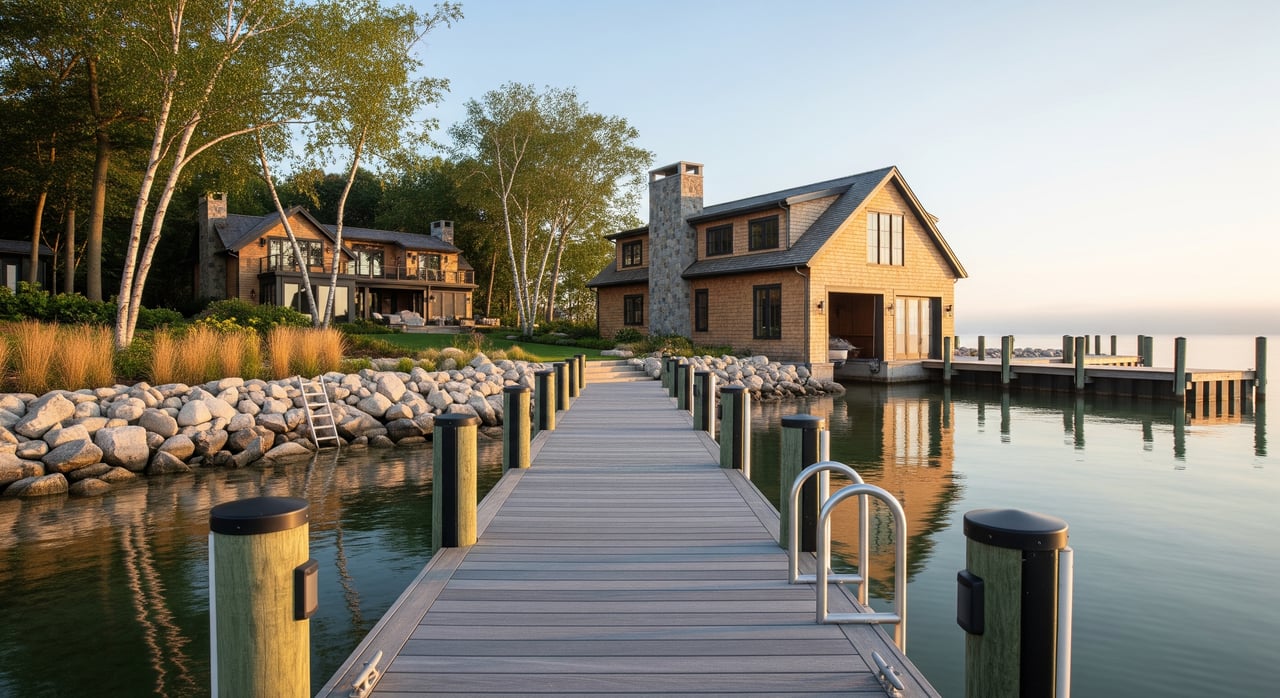
- Definition: A dock or pier is a structure that extends from shore for mooring and access. The pierhead is the platform at the end. A walkway connects the shore to the dock or platform.
- Why it matters in Petoskey: Seasonal docks are common due to ice, and many dock projects near or past the OHWM require permits.
- What to check: Ask for prior dock permits, engineering plans if any, and maintenance records. Confirm seasonal removal practices.
Boathouse, boatport, and boathouse with living space
- Definition: A boathouse is enclosed boat storage at the shore; a boatport is more open. Boathouses with living space are highly regulated and may be restricted.
- Why it matters in Petoskey: Local and state rules often limit new boathouses because of shoreline impact and navigation concerns.
- What to check: Confirm local ordinances and state requirements before planning any enclosed structure near the water.
Slip, berth, and transient slip
- Definition: A slip or berth is a designated mooring space at a dock or marina. A transient slip is for short-term dockage with services for visiting boats.
- Why it matters in Petoskey: Ownership or use of a slip may be tied to your property, an HOA, or a separate marina agreement.
- What to check: Review HOA or marina documents for slip allocation, fees, and guest policies.
Mooring buoy and mooring field
- Definition: A mooring buoy is anchored to the lakebed for tying a boat. A mooring field is an area designated for multiple moorings.
- Why it matters in Petoskey: Installing a buoy in shared waters can require permission or permits and may be regulated by local harbor authorities.
- What to check: Contact the appropriate local or state authority before placing a mooring buoy.
Boat lifts, davits, and PWC lifts
- Definition: These systems lift boats or personal watercraft out of the water to prevent damage and manage ice exposure.
- Why it matters in Petoskey: Ice pressure can damage boats and docks, so lifts and seasonal removal are common solutions.
- What to check: Confirm placement and size rules with permitting authorities and review insurance coverage for accessories.
Seawall, bulkhead, riprap, revetment, and living shoreline
- Definition: Seawalls and bulkheads are hard, vertical barriers for erosion control. Riprap or rock revetment is sloped rock along the shore. Living shorelines use native plants and natural materials to stabilize banks.
- Why it matters in Petoskey: Each option has tradeoffs for habitat, maintenance, and permitting. Living shorelines are often encouraged where feasible.
- What to check: Ask for permits and engineering for any existing shoreline armoring. Consult professionals before altering shore protection.
Permanent vs. seasonal structures
- Definition: Permanent structures stay year-round and often need engineered design and permits. Seasonal structures are installed and removed each year and are common in northern climates.
- Why it matters in Petoskey: Ice can damage permanent equipment, and seasonal setups may be treated differently in permit reviews.
- What to check: Verify how the dock and lifts are handled in winter and what permits were obtained.
Shared dock, community dock, and association dock
- Definition: Shared or association docks are managed by a homeowners association or similar group, with rules for slip use and maintenance.
- Why it matters in Petoskey: Many condo and subdivision properties rely on shared waterfront amenities.
- What to check: Read HOA bylaws, meeting minutes, budgets, and rules for slip assignments and guest use.
Permits, zoning, and environmental factors
Michigan EGLE
- Definition: The Michigan Department of Environment, Great Lakes, and Energy reviews and permits work that affects inland lakes, streams, wetlands, and Great Lakes shorelines.
- Why it matters in Petoskey: Docks, seawalls, riprap, dredging, and similar projects near the OHWM often require EGLE permits.
- What to check: Request copies of past permits and consult EGLE early for new shoreline or in-water work.
U.S. Army Corps of Engineers
- Definition: The Corps regulates structures and activities in navigable waters, including many Great Lakes projects.
- Why it matters in Petoskey: Work that extends into navigable waters or involves dredging may require a Corps permit in addition to state and local approvals.
- What to check: Ask whether past or planned projects triggered Corps jurisdiction and obtain documentation.
Michigan DNR
- Definition: The Michigan Department of Natural Resources supports fisheries, aquatic invasive species guidance, and public trust information.
- Why it matters in Petoskey: DNR guidance influences best practices for protecting habitat and preventing invasive species.
- What to check: Follow DNR recommendations for boat cleaning and shoreline stewardship, especially if you own lifts or move equipment between lakes.
Local zoning and setbacks
- Definition: Local governments set rules for building location, lot coverage, height, and shoreline setbacks, often measured from the OHWM.
- Why it matters in Petoskey: Rules vary by the City of Petoskey, Emmet County, and individual townships, so the allowed buildable area differs by address.
- What to check: Confirm current zoning, overlay districts, and setback standards with the city or your township before you design improvements.
Dredging and fill
- Definition: Removing or adding material in or near the water is regulated and often requires detailed review.
- Why it matters in Petoskey: Even small projects can trigger multiple permits because of habitat and water quality concerns.
- What to check: Do not dredge or place fill without consulting EGLE, the Corps, and local officials.
Wetlands
- Definition: Work in regulated wetlands typically requires permits and may require mitigation.
- Why it matters in Petoskey: Many shoreline parcels include wetland areas that influence where you can build or place structures.
- What to check: Ask for any wetland assessments and consult agencies before work near low-lying or vegetated shore areas.
Aquatic invasive species
- Definition: Species such as Eurasian watermilfoil and zebra or quagga mussels disrupt habitat and boating.
- Why it matters in Petoskey: Local watershed groups and the DNR promote boat cleaning, draining, and drying to prevent spread.
- What to check: Ask sellers about past AIS incidents and confirm any lake association management plans.
Shoreline vegetation buffers and living shorelines
- Definition: Native vegetation buffers and nature-based stabilization protect water quality and reduce erosion.
- Why it matters in Petoskey: These practices are encouraged by local watershed groups and can simplify maintenance while supporting habitat.
- What to check: Review any existing restoration plans and plant lists before altering landscaping near the water.
Ice, seasonal stresses, insurance, and maintenance
- Definition: Ice heave and pressure can damage docks, lifts, and shore protection, so seasonal removal and robust design are common.
- Why it matters in Petoskey: Winter conditions on Little Traverse Bay are a recurring test for waterfront structures.
- What to check: Confirm seasonal procedures, service contracts, and insurance coverage for docks and accessories.
Quick due diligence checklist
Use this shortlist when you evaluate a waterfront property:
- Deed, legal description, and any reserved rights or easements.
- Recent survey showing the OHWM, setbacks, and easements.
- Copies of permits for docks, seawalls, dredging, or shoreline work.
- HOA or association bylaws, meeting minutes, budgets, and slip rules.
- Maintenance records for docks, lifts, seawalls, and septic near shore.
- Any environmental or restoration reports and invasive species history.
- Title insurance exceptions related to water rights or public trust.
Handling disputes or missing permits
- Start with a licensed surveyor to confirm the OHWM and property lines.
- Speak with local planning and zoning staff to review what was permitted.
- For serious or unresolved issues, engage a real estate attorney with waterfront experience and gather historical photos if relevant.
When you understand these terms and how they apply on Little Traverse Bay, you can protect your investment and enjoy the lifestyle with fewer surprises. If you want help reviewing a specific property or planning a purchase or sale strategy, reach out to Pat Leavy - Kidd & Leavy Real Estate for a free consultation and local guidance.
FAQs
Do I own the beach in front of my Great Lakes home in Petoskey?
- The state holds Great Lakes submerged lands in trust up to the OHWM, so you have reasonable access and use from your shore, but you do not own the lakebed below the OHWM.
Can I build a new dock on Little Traverse Bay?
- Possibly, but many docks and related structures near or past the OHWM require permits. Confirm local zoning and consult EGLE and the Corps early.
Are boathouses allowed on Emmet County shorelines?
- Boathouses are often limited by local and state rules because they alter the shoreline and views. Check your city or township ordinance and state requirements.
What documents should I ask for when buying a waterfront home?
- Request the deed, recent survey with OHWM, prior shoreline and dock permits, HOA rules if applicable, maintenance records, and title exceptions tied to water rights.
How does winter affect docks and insurance on Little Traverse Bay?
- Ice can damage docks and lifts, so seasonal removal is common. Ask about winter procedures and confirm insurance coverage for accessory structures.